
You’re Not Entitled To High Fashion: Challenging Unsustainable Consumerism
- Mar 4, 2024
- 3 min read
Written and Researched by Lucas Villett

Source: Paper Magazine
Once the exclusive domain of the elite few, high fashion has been democratized in the digital age. As Caroline Rush, chief executive of the British Fashion Council, explains “Over the past 10 years, social media played an increasingly important role in fashion weeks, giving more people more access to events and experiences that were once aimed only at a select group of industry insiders, celebrities and high-net-worth individuals,” Yet, this newfound accessibility comes at a cost – the proliferation of fast fashion and the degradation of the planet.
Designs being made available to those who would otherwise not have access to them in the past is not a bad thing in and of itself, but it's drastically changing how clothing is being consumed. Prior to the rise of social media, the lifespan of a fashion trend was dictated by the brands that conjured them.“Trends move from couture luxury fashion to premium fashion brands and diffusion lines, then to the mass market and finally the low-priced labels and retail chains,” explained the retail data analytics firm Edited in an article examining the [new] trend cycle.
There was a stark unattainability particular to the newest designs and clothing worn only by a select few. Emulating the styles of celebrities or wearing the clothes on the runways of Vogue were the dreamscapes of many, as these coveted ensembles were often out of reach for the average buyer, until the next season. Even after many months, when they were available in store, the price tags attached to these pieces served as formidable barriers, preventing all but wealthy individuals from indulging in them.
The ubiquitous exposure to luxury designs has laid the foundation for tech-savvy fast-fashion brands to seize upon emerging trends and quickly replicate them for mass consumption. Vox Media reported that fast-fashion behemoth Shein can steal a look from the catwalk and get it into production in under a week. These types of brands can cater to the ever-changing tastes of consumers at cheap prices. Capitalizing on the fleeting nature of trends and driving demand for their products. Revolutionizing the way trends operate within markets and engendering counterfeit culture.
Microtrends, born from the fertile soil of platforms like TikTok, proliferate with alarming speed, each encapsulating a distinct "vibe" or "aesthetic" that speaks to our insatiable appetite for novelty. Yet, amidst this kaleidoscope of clothing choices, a pervasive sense of disorientation lingers. People are unsure of their fashion identities and in an attempt to develop their style, are purchasing an abundance of clothing from fast-fashion retailers whose longevity can be reduced to one or two wears. What do we end up with? Landfills greater than cities and, according to the UN, the prosperity of an industry responsible for 10 percent of global greenhouse gas emissions. That's more emissions than the combination of both shipping and aviation.
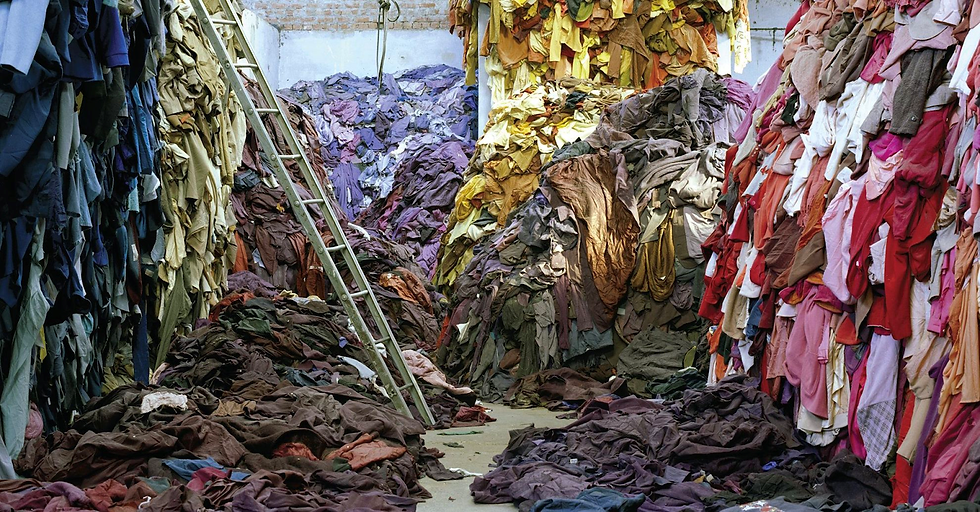
Source: Re/Make.com
We live in an age of curated realities, whereby influencers wearing the latest trends become avatars of an aspirational life. They offer glimpses into a world not affordable to most while simultaneously instilling a yearning to belong to it. This, in turn, fuels the counterfeit market, which churns out cheap imitations that are as bad for the environment as they are for artistic integrity. NSS magazine reported that over 50% of Gen-Z has purchased fake fashion in the last 12 months. These flimsy replicas of the originals lack the craftsmanship and quality of their authentic counterparts. Destined for a quick demise, they are swelling landfills at an alarming rate.
The environmental impact of fast-fashion and counterfeits is unconscionable. The production of mass-produced clothing requires vast quantities of water, energy, and raw materials, depleting finite resources and exacerbating climate change. Synthetic materials, used extensively in these types of garments, contribute to pollution and waste and their composition of microplastics infiltrates our oceans and ecosystems, as noted by Brittany Siera for the Sustainable Fashion Forum.
In the face of this relentless onslaught of consumerism, it is incumbent upon us to redefine our relationship with fashion. We should resist the allure of excess and opt for a more mindful approach to consumption. As fashion heroine Vivienne Westwood famously said, “Buy less, choose well, make it last.” By investing in quality over quantity and building a wardrobe based on personal style rather than fleeting trends, we can begin to forge a more sustainable path forward. Consider saving up for a desired item, or explore the option of buying it secondhand. But if you want to succumb to the siren song of rapid consumerism and damage our planet the choice is yours. But I think you’re an asshole.


Comments